The Story
How to Add Silver Fusion Jewellery to Your Retail Collection
A store known for traditional jewellery may receive requests for pieces that customers can style beyond a complete occasion-wear set.
Silver Fusion jewellery offers a design direction to explore: familiar motifs combined with different proportions, colour arrangements or contemporary styling. Whether it belongs in your store depends on your customers and the gap it fills in the existing collection.
This guide explains how retailers and boutiques can shortlist designs, assess samples and test a focused wholesale selection.
Define What Fusion Means for Your Store
Fusion is a broad style description. It does not establish the metal, stone materials or manufacturing process.
Before selecting products, describe the direction you want. For example:
Traditional motifs in a simpler composition.
A prominent pendant with a contemporary outline.
Multicolour statement pieces.
Designs that customers can pair with both ethnic and contemporary clothing.
These directions can produce very different assortments.
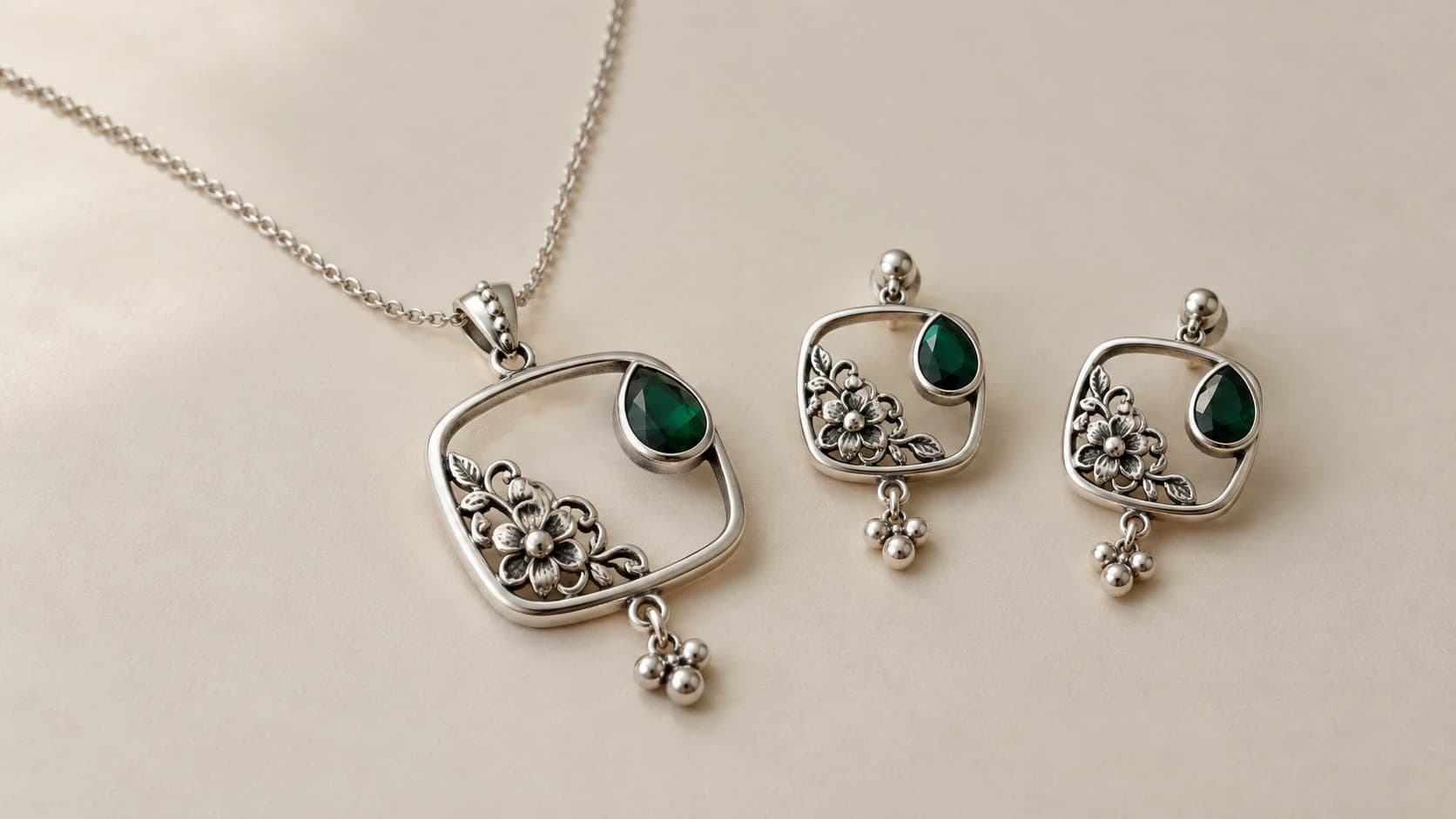
Varnya’s silver Fusion jewellery collection includes statement necklaces with floral, paisley, peacock and elephant-inspired design references. Use the catalogue to identify specific features rather than requesting “Fusion jewellery” without further guidance.
Identify the Gap in Your Existing Range
Review the collection you already sell.
If your display is dominated by elaborate necklace sets, another equally elaborate format may add little practical choice. A pendant-focused design or a different colour direction might address a clearer gap.
Ask:
Which customer requests are we currently unable to fulfil?
Are buyers looking for complete sets or standalone pieces?
What dimensions and visual scale do they prefer?
What purchase and selling-price ranges suit the business?
Can staff explain how the new designs complement the existing range?
Use actual enquiries where available. Treat assumptions as things to test.
Compare Silhouettes Before Choosing Colours
Begin with the overall shape.
Compare broad necklaces, pendant-focused arrangements, circular medallions and elongated forms. Consider where each piece sits and how much visual space it occupies.
Only then choose colour and finish variants.
Several versions of one silhouette may be useful where customers request them, but they do not necessarily create a varied collection.
Varnya’s Fusion necklace designs provide a starting point for comparing different central shapes and motif arrangements. Confirm dimensions and set contents for the selected SKUs.
Give Motifs a Clear Role
Floral, animal-inspired and geometric details can create different visual identities.
Choose a small number of directions that work together rather than buying every motif offered.
For example, a retailer might test one floral design and one architectural or geometric composition before expanding further. That is a planning approach, not a claim that those motifs will outperform others.
Use accurate motif descriptions. Avoid attaching cultural or historical meanings to a design unless those meanings have been verified.
Keep Materials Separate from Appearance
A multicolour finish does not identify the coloured components.
For each selected design, request:
Base metal and stated purity.
Main stones and decorative materials.
Details of beads or pearl-like elements.
Finish or coating description.
Dimensions and defined weight figures.
Supplied set contents.
Do not describe a green component as natural emerald or a pearl-like drop as a cultured pearl without confirmation.
For silver claims, our guide to verifying 925 silver jewellery explains what supporting evidence to request.
Assess Styling Through Real Presentations
Show the sample with clothing that reflects your actual customers.
A necklace photographed alone may appear versatile, yet sit awkwardly against a particular neckline or compete with a heavily patterned garment.
Review:
Pendant position.
Necklace length and adjustment.
Movement of hanging components.
Balance between colour and exposed metal.
Whether matching earrings are necessary or optional.
Use the styling exercise to gather feedback rather than declaring that every piece suits every outfit.
For online selling, include clear product views alongside any styled photographs.
Approve Colour and Finish Together
Review the metal finish and decorative colours as one composition.
Gold polish, Victorian polish and silver-coloured finishes can change the appearance of the same motif. Ask which options are available for the actual design.
Compare samples under consistent lighting. Record the approved finish reference and any colour differences that require review.
Our guide to Victorian polish vs gold polish explains how to document those decisions.
Do not assume colour matching is established by a finish name alone.
Inspect Wearability Before Ordering
Statement designs need a physical review of proportion and construction.
Check:
How the necklace sits when worn.
Whether the centrepiece faces correctly.
Movement between connected sections.
Clearance around suspended drops.
Reverse surfaces and contact edges.
Closure operation.
Earring balance, where supplied.
A large pendant may create the intended appearance but still need an adjustment to its suspension or necklace length.
Use our jewellery sample approval checklist to record findings and required changes.
Plan the Purchase Commitment
Request complete quotations before deciding how many designs to introduce.
Compare materials, making, finishes, set contents and additional charges. Confirm whether quantities can be mixed across designs and variants.
Our guide to jewellery wholesale MOQ explains the minimums to clarify.
Avoid adding unrelated products simply to reach a threshold. If the proposed commitment is too large, discuss a narrower selection or available sampling options.
Use a Focused Trial Assortment
Selection fieldWhat to recordSKUExact design referenceSilhouetteOverall shape and intended positionMotifMain design featureCollection roleGap the piece addressesMaterialsConfirmed metal and decorative componentsVariantFinish and colour referencePurchase costComplete quotationQuantityPieces or setsReviewSample findings and customer feedback
Start with a selection your business can support. Keep the buying reason for each design visible.
Evaluate Response Before Expanding
Record enquiries, sales, stock held and customer objections.
Separate requests about colour, size, weight and price. These point towards different decisions.
If customers like a motif but find the necklace too broad, adding more colour variants may not solve the issue. A revised silhouette may be worth discussing instead.
For custom adjustments, prepare a custom jewellery design brief. Confirm feasibility, cost and any fresh approval requirements.
Explore Wholesale Fusion Jewellery with Varnya Jewels
Varnya Jewels works with retailers, wholesalers and jewellery brands sourcing silver jewellery from Jaipur.
Explore our Fusion jewellery collection, then share your preferred designs, finishes, quantities and purchase budget. Confirm specifications and current availability before ordering.
Request our wholesale Fusion jewellery catalogue or book a Fusion collection video call.
End of story
Thank you for reading.