The Story
Victorian Polish vs Gold Polish on Silver Jewellery
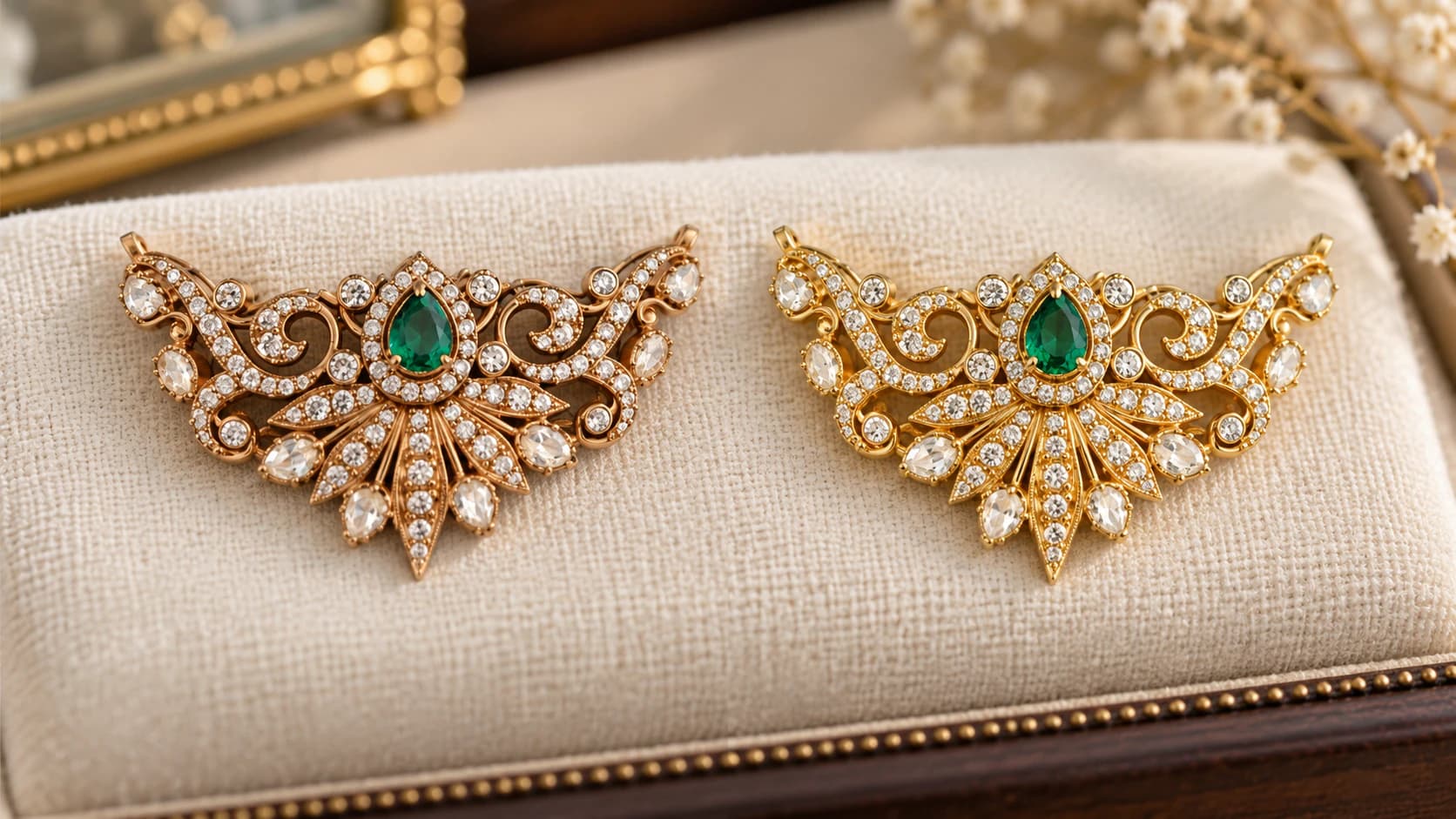
The same silver jewellery design can look noticeably different in Victorian polish and gold polish. A change in tone, brightness or darkened detailing can alter how the stones, motifs and overall piece appear.
For jewellery retailers, wholesalers and brands, choosing between these finishes involves more than selecting a catalogue photograph. The finish needs to match the intended collection and be specified clearly enough for production and repeat orders.
This guide compares Victorian polish vs gold polish and explains what to confirm before placing a wholesale order.
What Is Victorian Polish?
In contemporary Indian jewellery trade usage, Victorian polish generally describes an antique-inspired appearance with subdued tones, darker detailing or contrasting bright and dark areas. The exact appearance varies between suppliers.
It is a finish description, rather than a declaration of the base metal, stone identity or age of the jewellery. A newly manufactured necklace with Victorian polish is not automatically an antique or an original Victorian-era piece.
The name alone also does not establish the finishing process. Ask the manufacturer to explain the treatment used and provide a sample showing the intended result.
For wholesale buying, the approved appearance matters more than relying on a finish name that different workshops may interpret differently.
What Is Gold Polish?
Gold polish is commonly used as a trade description for a gold-coloured finish. It does not, by itself, establish the coating material, gold purity, thickness or application method.
Gold-polished silver jewellery remains silver-based jewellery. It should not be described as solid gold.
If a supplier specifies gold plating, request the available plating details separately. Avoid assuming that every product described as “gold polish” has the same technical specification.
Gold-toned finishes can also vary in shade and brightness. A pale warm tone, a stronger yellow tone and a muted antique-gold appearance can produce different results on the same design.
Victorian Polish vs Gold Polish: Key Differences
ConsiderationVictorian polishGold polishTypical visual directionSubdued, antique-inspired or contrasting tonesGold-coloured appearance with varying shades and brightnessDarkened detailingOften part of the intended appearanceDepends on the approved finishVisual emphasisCan highlight depth and contrast around motifsCan emphasise warm metal tonesBase metalMust be confirmed separatelyMust be confirmed separatelyTechnical processCannot be established from the name aloneCannot be established from the name aloneApproval requirementConfirm dark areas, highlights and overall toneConfirm shade, brightness and coverage
These descriptions are starting points. A physical sample or agreed finish reference should determine the final specification.
Choose the Finish Around the Jewellery Design
Evaluate the finish on the actual design you plan to order.
On an intricate necklace, darker recesses may make certain details more visible. A warmer, brighter finish may draw more attention to the metal surfaces. Neither effect makes one finish universally better.
Compare:
How clearly the motifs and stone settings remain visible.
The balance between exposed metal and stones.
Whether the finish suits the coloured components.
The appearance of the necklace and matching earrings together.
How the back, links and closures are finished.
When reviewing 925 silver Moissanite jewellery, keep stone identity separate from finish selection. Changing the surface finish does not change Moissanite into diamond or alter the stated base-metal purity.
For designs with multiple colours and decorative motifs, review the finish alongside the full composition, as you would when selecting silver Fusion jewellery.
Approve Samples Under Consistent Lighting
Catalogue photographs are useful for shortlisting, but lighting and image processing can change the apparent colour of a finish.
Before approving a bulk order:
Compare finish options on the same design where practical.
Inspect them under the same lighting.
Review the front, back, edges, links and closures.
Check the necklace and earrings as a complete set.
Record which sample is approved.
During a video call, ask the supplier to show the jewellery from several angles and avoid strong colour filters. For orders where tone matching is particularly important, consider approving a physical sample.
Keep an identified reference sample for repeat orders. Photographs can support that record, but they should not be the only reference when colour consistency is critical.
Put the Finish Specification in Writing
An instruction such as “Victorian polish, same as before” can leave room for interpretation.
Use a more complete approval record:
SpecificationWhat to recordDesignSKU or approved design referenceBase metalConfirmed material and purityFinish referenceSample number and approval dateColourAgreed tone and brightnessDarkened areasTheir location and intended extentCoverageRequirements for backs, links and fasteningsTechnical detailsAvailable coating or plating specificationsAcceptanceHow variations will be reviewed before dispatch
For example:
“Use the finish shown on approved sample VJ-F01, dated [approval date]. Match the front highlights and darkened recesses. Finish the matching earrings and fastening components consistently.”
Replace the reference with the actual sample details. Confirm feasibility and acceptable variation with the manufacturer before production.
Does One Finish Last Longer?
The finish name alone is not enough to predict service life.
Performance depends on the actual surface treatment, preparation, coating specification, handling and conditions of use. Jewellery construction and contact points also matter.
Ask the supplier:
What treatment or coating is applied?
What care instructions suit the complete piece?
Is any durability testing available, and what does it cover?
Can the jewellery be refinished?
What written after-sales terms apply?
Avoid making “permanent colour,” “waterproof” or fixed-lifespan claims unless they are supported for the supplied product.
Explain Care Without Damaging the Intended Finish
Give buyers care instructions suited to the metal, coating, stones and construction together.
GIA notes that chemicals can damage or discolour jewellery metals and affect some gemstones. Its guidance also recommends protecting pieces from scratches during storage. Read GIA’s jewellery-care guidance.
For finished silver jewellery:
Avoid direct contact with perfume, household cleaners and other chemicals.
Store pieces separately to reduce rubbing and scratches.
Follow the manufacturer’s instructions for wiping and cleaning.
Ask before using polishing cloths, dips or cleaning machines.
Do not assume a product intended to polish bare silver is suitable for plated or deliberately darkened surfaces. Confirm the method before trying to brighten an antique-style finish.
Plan Your Wholesale Assortment Around Buyer Preferences
Choose finish quantities using your own customer enquiries, sales history and sample feedback.
If you are testing a new range, ask whether a small selection can be supplied in different finishes. Confirm any minimum quantities or separate finishing charges before planning the order.
Track responses by SKU and finish. This provides a clearer basis for reordering than assuming one finish will sell better across every design or market.
For the wider sourcing process, including materials, samples and order terms, read our wholesale Moissanite Polki buying checklist.
Discuss Finish Options with Varnya Jewels
Varnya Jewels works with jewellery retailers, wholesalers and brands sourcing silver jewellery from Jaipur.
Share your selected designs, preferred finish, approximate order quantity and any sample references. Confirm available finish options and specifications for the pieces you intend to order.
Request a catalogue or discuss finish options and arrange a video call to review the collection.
End of story
Thank you for reading.