The Story
How to Write a Custom Jewellery Manufacturing Brief
A reference photograph can show the appearance you want, but it cannot explain every decision a manufacturer needs to make.
It may leave the metal, stone identity, dimensions, weight, fastening method and finish open to interpretation. Those details affect feasibility, pricing and the finished product.
A custom jewellery design brief brings the requirements together before development begins. For brands, retailers and wholesale buyers, it provides a shared starting point for quotations, CAD review, sampling and production.
You do not need to arrive with every technical answer. Clearly separate confirmed requirements from decisions you want the manufacturer to help resolve.
What Is a Custom Jewellery Design Brief?
A custom jewellery design brief is a written description of the product you want developed.
It combines visual references with material specifications, measurements, quantities and commercial requirements. It should also identify what must remain fixed and where changes can be proposed.
For example, the central motif might be essential to your collection, while the clasp construction remains open to the manufacturer’s recommendation.
A clear brief allows those choices to be discussed before they become assumptions.
What Should Your Manufacturing Brief Include?
1. Product Type and Set Contents
State exactly what you want supplied.
For a necklace set, specify whether it includes earrings, a maang tikka or other pieces. For earrings, record quantities in pairs rather than leaving “pieces” ambiguous.
Include a project name or design reference so sketches, quotations and sample discussions can be traced to the same item.
2. Visual References and Design Priorities
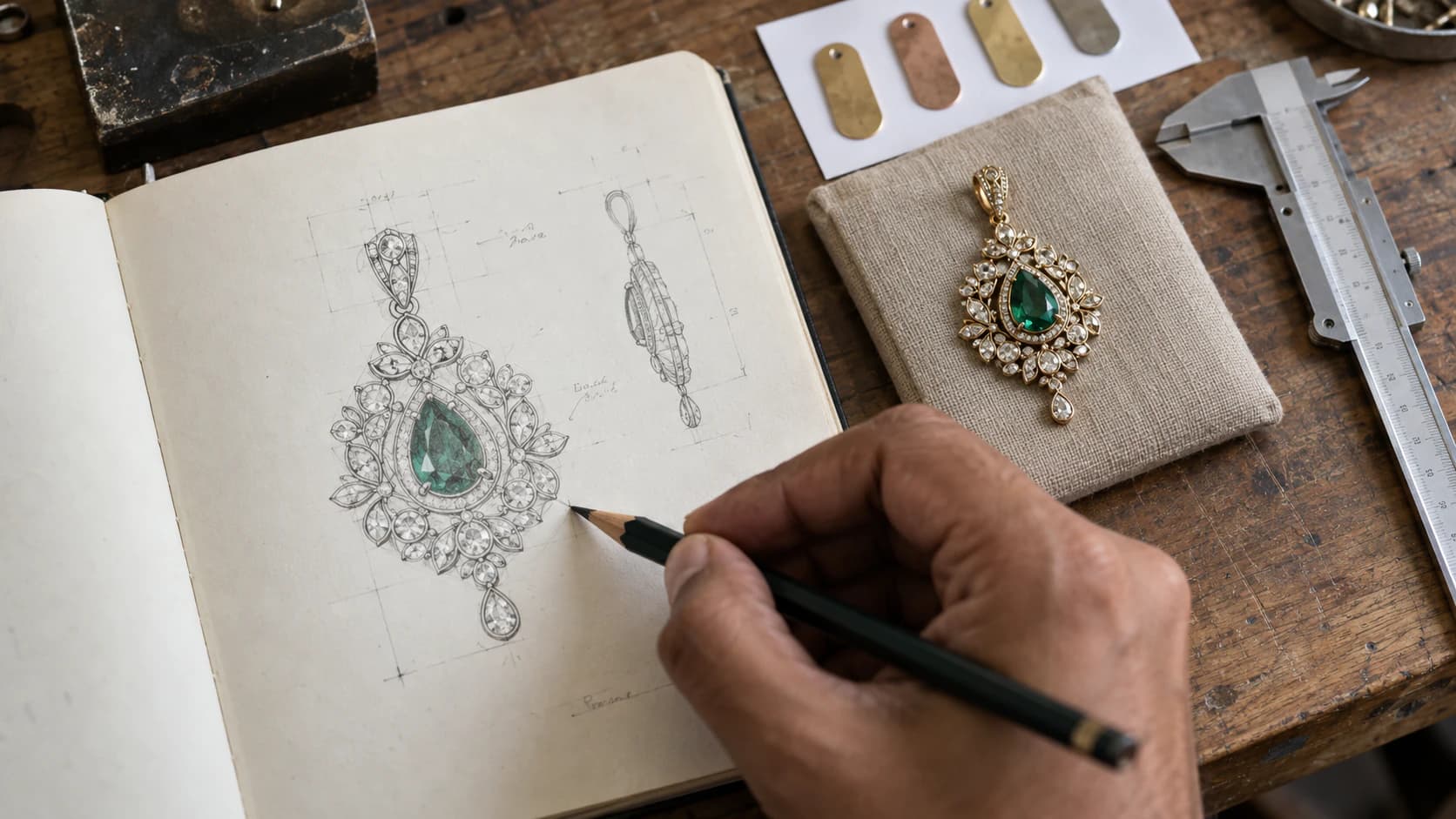
Share your own sketches, authorised reference images, existing samples or available CAD files.
Annotate references to explain which details matter:
Overall silhouette.
Central motif.
Stone arrangement.
Pendant shape.
Link movement.
Surface texture.
Details you want changed.
Avoid sending several images with the instruction “make something like these.” Explain what each reference contributes.
Identify any logos or design assets you are authorised to use. If ownership, confidentiality or exclusivity matters, agree on those terms before sharing production files.
3. Metal and Stone Specifications
State the required base metal and purity, such as 925 sterling silver.
List the main stones and decorative components separately. Moissanite, diamond and CZ are different materials; a colour or trade name should not replace an identified specification.
For example, “green centre stone” describes an appearance. It does not establish whether the component is natural emerald, another gemstone, glass or a composite.
If a material is undecided, write “manufacturer to propose options” and state your visual and budget priorities.
4. Dimensions, Weight and Wearability
Provide the measurements that determine the product’s proportions.
Depending on the design, include:
Necklace length and adjustment range.
Pendant height and width.
Earring length and width.
Ring size or sizing system.
Bangle internal dimensions.
Maximum acceptable weight per piece or pair.
Clarify whether a weight target means gross jewellery weight or net metal weight.
Distinguish essential limits from approximate preferences. A weight target may need revision after the manufacturer assesses construction and stone requirements.
5. Finish and Colour Reference
Specify the finish independently of the metal.
“925 silver with gold-polish finish” communicates a different requirement from solid gold. Victorian polish also needs an approved tone and detailing reference.
Record:
Intended colour and brightness.
Darkened areas or contrasting highlights.
Finish requirements for backs and closures.
Available coating specifications you need confirmed.
Use our guide to Victorian polish vs gold polish on silver jewellery when preparing the finish section.
6. Quantities and Variants
List quantities for each design, size, stone colour and finish.
Separate the sample requirement from the intended production order. A request for one sample followed by a possible bulk order is different from a confirmed production quantity.
Ask the manufacturer to confirm applicable minimums. Our guide to jewellery wholesale MOQ explains how overall, design and finish requirements can differ.
7. Budget and Required Date
Share your target purchase budget and explain what it includes.
State whether the figure is intended to cover metal, making, stones, finishing, development, packaging, taxes and delivery. If your target is a retail selling price, label it accordingly rather than presenting it as the manufacturing budget.
Provide your required delivery date and destination. Ask the manufacturer to assess feasibility after reviewing development, approval and production requirements.
A requested date becomes a commitment only when both parties agree to it.
Do You Need CAD Files Before Contacting a Manufacturer?
Not necessarily. You can begin with a clear sketch, measurements and written requirements, then discuss whether CAD development is appropriate.
The Gem & Jewellery Skill Council of India describes jewellery CAD work as translating design requirements into models used for prototyping and manufacturing. Its occupational guidance includes dimensions, weight, gemstones, assembly and manufacturing considerations.
Ask who will prepare the CAD, which deliverables are included, how revisions are handled and what file-use rights apply.
A rendered image can help review proportions and layout. Physical qualities such as movement, comfort and finish should be checked through the agreed sampling process.
Example: A Custom Silver Necklace Brief
The following is a hypothetical example, not a Varnya product specification or quotation.
RequirementExample briefProductNecklace with matching earringsMetal925 sterling silverMain stonesMoissanite; sizes and shapes to be proposedColoured componentsGreen accents; material options requiredNecklace lengthApproximately 38cm, with adjustment proposalEarringsTarget length 4.5cm; weight estimate requiredFinishVictorian finish matched to an approved sampleDesign prioritiesPreserve the central floral motif; propose suitable links and closureSamplingOne complete sample set before production approvalProduction quantityTen sets, subject to confirmed MOQBudgetManufacturer to quote against the briefRequired dateBuyer to provide; manufacturer to confirm feasibility
This format makes unresolved decisions visible instead of hiding them behind a reference photograph.
Use This Brief Template for Your Enquiry
Copy the following fields and complete what you know:
Business name:
Contact person:
Delivery country and city:
Project or design reference:
Product type and set contents:
Attached sketches, references or files:
Details that must be preserved:
Details open to recommendations:
Base metal and purity:
Main stones and additional components:
Dimensions and sizing requirements:
Target weight and weight basis:
Finish and colour reference:
Sample requirement:
Production quantity by design and variant:
Target budget and included costs:
Required delivery date:
Branding or packaging requirements:
Confidentiality or ownership terms to discuss:
Questions requiring manufacturer recommendations:
Confirm Approval Stages Before Production
Ask the manufacturer to explain the proposed development route and approval points.
Depending on the project, these may include design review, quotation acceptance, CAD approval, physical sampling and production authorisation.
Keep dated records of approved drawings, samples and changes. If dimensions, stones or construction change, confirm whether the quotation and schedule also need revision.
For complex collections, identify one person on each side who can consolidate feedback. Conflicting instructions across messages make it harder to determine the approved version.
Compare Quotations Against the Same Brief
Send the same current brief to each shortlisted manufacturer.
Ask suppliers to identify assumptions, exclusions and proposed changes. A lower quotation may cover different stones, dimensions, set contents or development work.
Our guide on how to compare wholesale silver jewellery quotations explains how to review the calculation and scope.
Update the brief when you accept a change. The latest agreed version should remain the reference for the order.
Discuss Custom Jewellery Development with Varnya Jewels
Varnya Jewels works with jewellery retailers, wholesalers and brands on custom jewellery development from Jaipur.
Share your sketch, reference or initial idea alongside the materials, quantities, finish and dimensions you have decided. Mark any open questions so they can be discussed during the feasibility review.
Discuss your custom jewellery requirements and request guidance on the next development steps.
End of story
Thank you for reading.