The Story
Jewellery CAD Approval: From Reference to Wholesale Sample
A jewellery reference photograph can communicate a style, but it rarely explains everything needed to manufacture the piece. Dimensions, stone specifications, construction, finish and movement may still be undecided.
For retailers and jewellery brands, jewellery CAD approval helps turn that initial idea into a documented design before sampling. However, approving a digital drawing and approving a finished sample are separate decisions.
This guide explains what wholesale buyers should confirm at each stage of the custom jewellery development process.
1. Turn Your Reference Into a Clear Design Direction
Start by explaining what you like about the reference.
For example, you may want the necklace’s curved outline, smaller central pendant or arrangement of coloured stones. You may want a different back construction, a lighter visual appearance or matching earrings with a shorter drop.
Mark these details directly on the reference image. Separate features you want to retain from those you want changed.
Useful starting information includes:
Product type and intended customer.
Target dimensions or a comparable existing piece.
Required metal and stone specifications.
Preferred finish.
Matching components or set contents.
Budget expectations and planned order quantity.
Use original designs or references you have permission to develop. Discuss any questions about design ownership and permitted use before work begins.
Our custom jewellery design brief guide explains how to organise these initial requirements.
2. Confirm Which Development Stages Apply
Ask the manufacturer which stages your design needs. The route may include sketches, CAD drawings, a prototype, a finished sample or a combination of these.
Do not assume every jewellery design follows an identical process. A modification to an existing design may require different work from a completely new piece.
Before development starts, confirm:
Which drawings or previews you will receive.
Whether a physical prototype or finished sample is included.
Development and sample charges.
How revisions are handled.
Who retains the physical sample.
Whether design files or tooling are included in the agreement.
Also clarify which approval allows the manufacturer to proceed to the next stage.
A message approving a drawing should state whether it authorises a revised drawing, a prototype or a finished sample.
3. Review CAD Drawings With Measurements
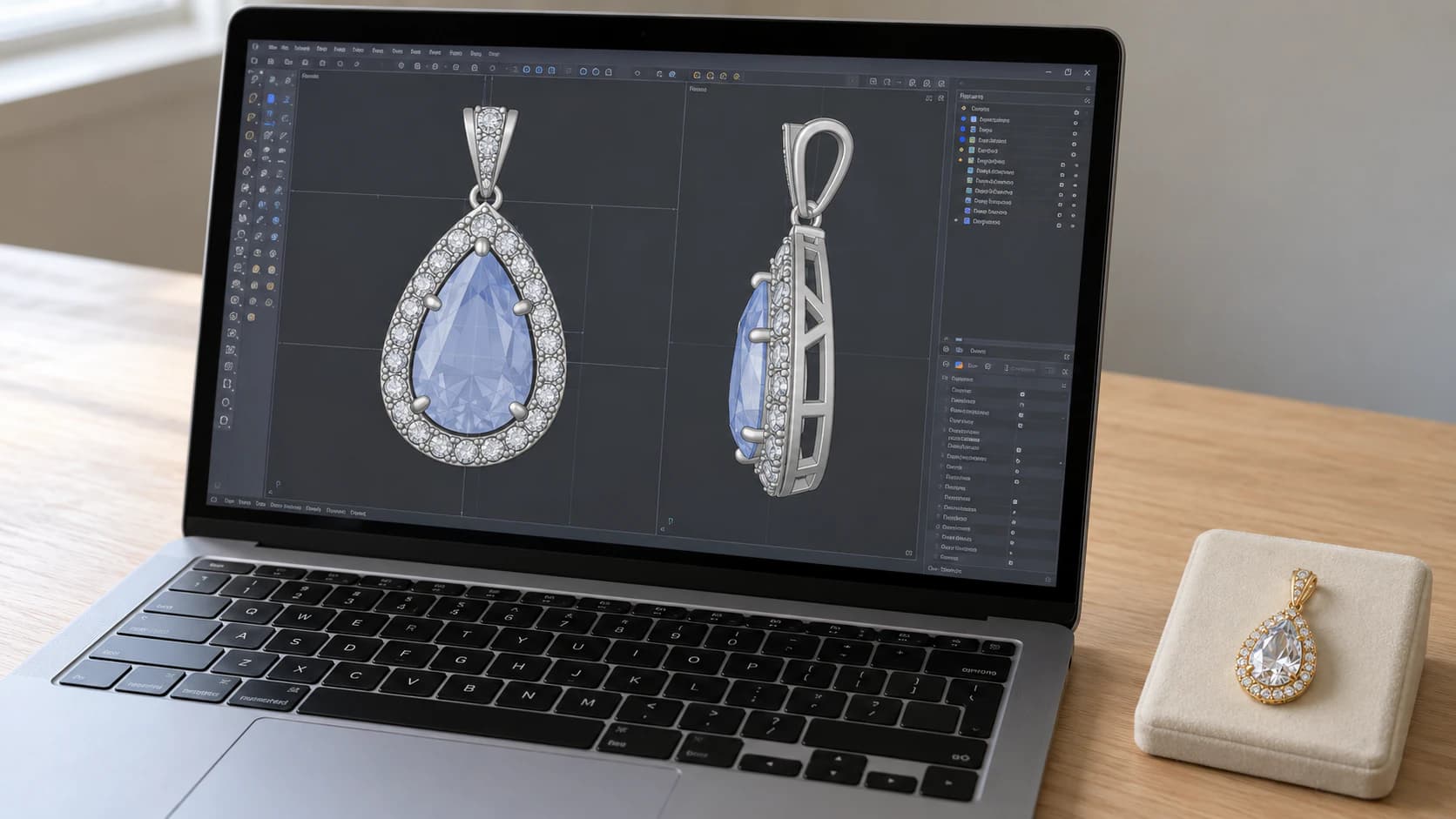
CAD stands for computer-aided design. A jewellery CAD model represents the design digitally and can provide different views of its structure.
GJSCI’s jewellery design handbook describes reviewing front, top, side and perspective views, along with dimensions and manufacturing information. These views help explain details that one attractive image may leave unclear.
For a necklace, request measurements for the overall width, central drop and important components. For matching earrings, confirm length and width separately.
Check the reverse and side views as carefully as the front. Ask how the piece connects, where articulated sections move and how the closure attaches.
Compare the stated measurements with a physical piece you already understand. A necklace that looks balanced on a screen may occupy a different amount of space than you expect.
4. Match Stone and Material Details to the Drawing
A rendered stone colour does not establish the actual material being supplied.
Confirm the agreed stone type, shape, size and arrangement in writing. If a design contains several stone materials, identify which material belongs in each section.
For custom silver jewellery, record the metal specification separately from the finish. For example, 925 silver describes the metal standard, while gold polish or Victorian polish describes the agreed surface treatment.
If the drawing shows decorative beads, drops or hanging elements, ask whether they represent the intended materials or are placeholders.
Where exact matching is important, agree how actual stone and bead availability will be confirmed before sampling.
5. Understand What a Render Cannot Confirm
A digital render is useful for discussing proportions and design direction. It cannot replace handling and inspecting the finished jewellery.
Treat the following as matters to assess through the appropriate physical sample:
Comfort and balance when worn.
Movement between connected sections.
Closure operation.
Surface smoothness and contact points.
Actual stone appearance.
Finished polish colour and texture.
A polished digital image should not become the sole reference for the final finish. Ask how the finish will be represented and approved physically.
Similarly, discuss whether any quoted weight is an estimate or a measured sample weight. Ask what is included in that figure.
For Varnya Jewels quotations, net weight includes the set Polki or stones, while beading is recorded separately. It should not be interpreted as metal-only silver weight.
6. Send One Consolidated Revision List
Scattered feedback can make it difficult to identify the latest instruction.
Instead, send one numbered revision list against a named drawing version. Use measurable requests wherever possible.
For example:
Design NK-01, revision 02: reduce the central drop from 45 mm to 38 mm, retain the outer necklace width, and provide an updated side view before sampling.
This is clearer than asking for the necklace to look “slightly smaller.”
After revisions, check the updated drawing again. Confirm that the requested change has been made and that related details remain suitable.
Keep the previous version for reference, but clearly identify which version is current.
7. Approve the Physical Sample Against the Agreed Design
Once the appropriate sample is ready, compare it with the approved drawing and written specification.
Check the dimensions, stone arrangement, set contents, closure, movement and finish. Record any differences and ask whether they are intentional, correctable or subject to an agreed tolerance.
If a sample uses a temporary material or an unfinished surface, document that limitation. It cannot establish approval for a feature it does not represent.
For a detailed inspection process, use our jewellery sample approval checklist.
Avoid mixing an unresolved change request with an unconditional approval. State what still needs revision and whether another sample or other evidence is required.
8. Record Production Approval Separately
Before authorising the wholesale order, connect the approved sample to the final order specification.
Your approval record should identify:
Design code and drawing revision.
Approved sample reference.
Metal, stones and finish.
Dimensions and agreed tolerances.
Quantity and set contents.
Pricing basis and weight definitions.
Packaging requirements.
Any remaining conditions.
For example:
Sample S-01 is approved for design NK-01, revision 03, subject to the attached final specification. Please confirm the order details before production begins.
Keep the approval record available for future orders. Our repeat order specification guide explains how to preserve the details needed when ordering the design again.
Discuss Your Custom Jewellery Requirements
A clear development process gives the buyer and manufacturer a shared reference at each stage.
When contacting Varnya Jewels, share your design references, intended specifications and wholesale requirements. Ask which development stages apply to your proposed design and confirm the scope before proceeding.
Request a wholesale jewellery catalogue or book a video call to discuss a custom jewellery design.
End of story
Thank you for reading.