The Story
How to Store Gold-Polished Silver Jewellery in Retail Stock
Jewellery can receive substantial handling before it reaches a customer. Pieces move between trays, displays, photographs, video calls and stockroom storage.
For retailers, knowing how to store gold-polished silver jewellery means choosing suitable protection and keeping handling consistent. It also means recognising that a storage method suitable for one design may be unsuitable for another.
This guide explains how to organise retail stock and establish care instructions around the actual materials supplied.
Confirm the Finish Before Choosing a Care Method
“Gold polish” is a trade description that does not, by itself, specify the coating material, thickness or application process.
Ask the supplier for the available finish details and the recommended care method for the selected product.
Do not automatically apply instructions for bare silver to a gold-coloured or deliberately darkened surface.
Our guide to Victorian polish vs gold polish explains what to record when approving the finish.
Keep those details with the SKU so staff can find them when preparing a piece for display or sale.
Protect Pieces from Rubbing Against Each Other
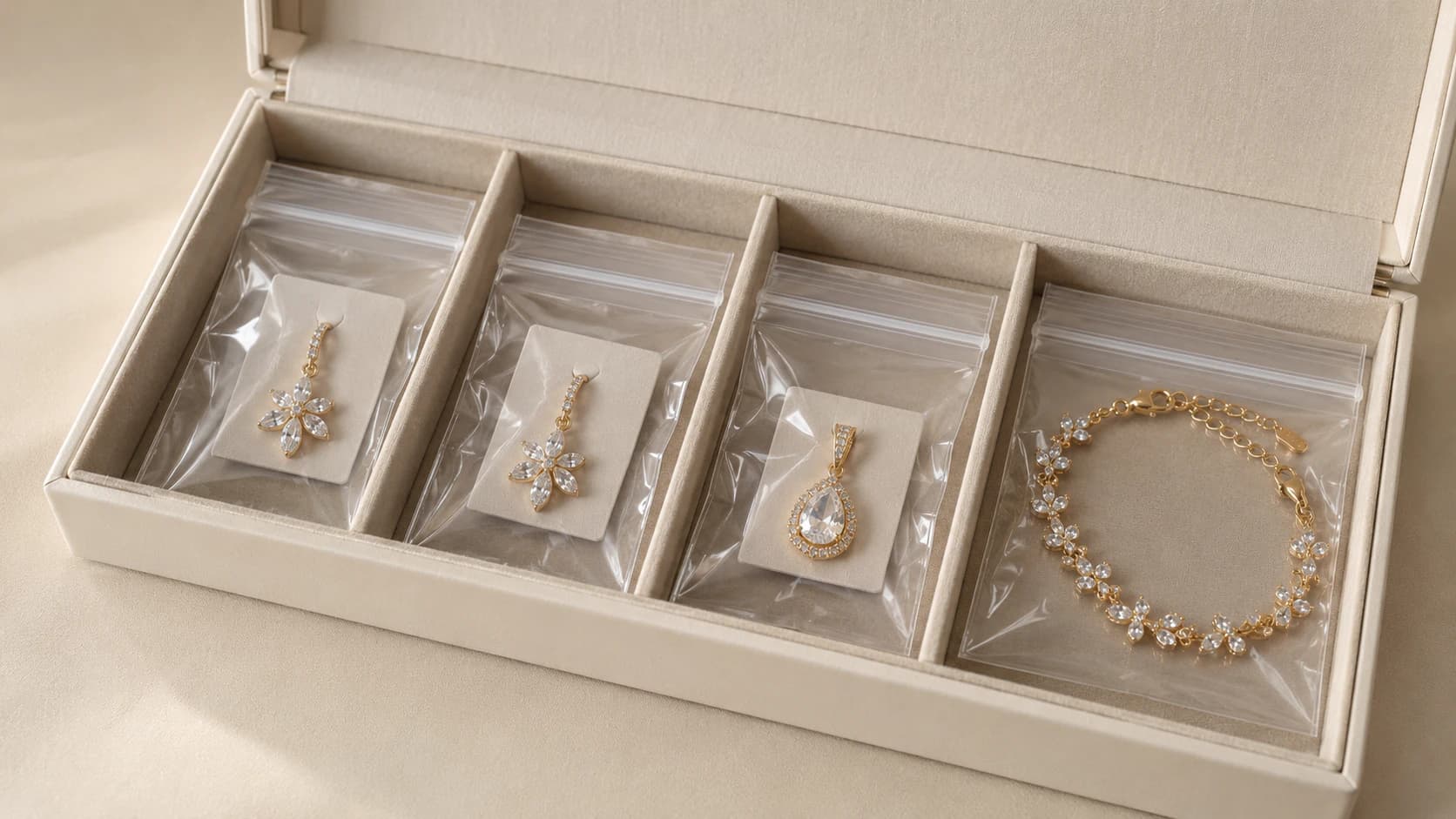
Give each piece or identified set enough separation to prevent unintended contact.
Check whether earrings can rub against a necklace, whether stone-set fronts touch neighbouring pieces, and whether hanging drops become trapped beneath heavier components.
GIA recommends organised storage with separate protection to reduce scratches and damage. Read GIA’s jewellery-care guidance.
For complete sets, separate components physically where needed while keeping their identity connected through labels.
Avoid stacking heavy pieces directly on top of delicate settings or projecting details.
Support the Shape of Necklaces and Beading
Choose a storage arrangement that does not force articulated sections into an unnatural position.
Lay out the necklace so its links, pendant and drops remain supported. Check that adjustable cords or chains are not caught beneath the decorative front.
For layered necklaces, prevent strands from becoming tightly crossed or tangled.
Do not assume every heavy necklace should remain hanging by its thread or beading for extended periods. Ask the supplier how the particular construction should be supported.
When moving a piece, support the main body rather than lifting it only by a delicate drop or decorative strand.
Use Product-Specific Environmental Guidance
Keep stock away from spills, cleaning products and direct contact with cosmetics.
GIA notes that chemicals can damage or discolour jewellery metals and affect some gemstones. Excessive heat and light can also harm certain materials.
Review where display lights, windows and cleaning routines expose the stock.
Avoid prescribing one humidity or sealing method for the entire catalogue. A piece combining silver, pearls, stones, thread and coatings may need a different arrangement from a metal-only product.
Ask for guidance covering the complete item.
Do Not Apply a Universal Rule to Pearl Components
First confirm whether pearl-like components are natural pearls, cultured pearls, imitation pearls or another material.
GIA advises against storing pearls in dry, hot environments. Pearl care should therefore not be reduced to “keep everything as dry as possible.”
Do not add moisture absorbers or choose long-term sealed storage automatically for every stone-set piece. Confirm suitability with the supplier or a qualified jewellery-care professional.
Where genuine pearls are present, retain their specific instructions alongside the finish-care guidance.
Check Whether Transit Packaging Suits Stock Storage
A shipment may arrive in packing designed for transport rather than extended retail holding.
Ask whether the supplied pouch, wrap, insert or container is suitable for the intended storage period and product materials.
Inspect packing for residue, rough contact points or fittings that catch the jewellery. Replace damaged or unsuitable protective materials using an agreed alternative.
Our guide to wholesale jewellery packaging specifications explains what to confirm before dispatch.
If you transfer products into store trays, preserve the SKU and set-content information.
Establish a Handling Routine for Display Pieces
Keep display stock identifiable so it is not confused with pieces that have remained packed.
A simple handling routine can include:
Preparing a clean surface before removing the item.
Supporting necklaces and pendants during movement.
Returning earrings to their correct set.
Recording concerns before cleaning.
Repacking according to the product’s instructions.
Handle jewellery with clean hands. If gloves are used, choose clean, suitable gloves that allow a secure grip and do not catch settings.
Do not label an item “untouched stock” if it has repeatedly been worn, handled or used for demonstrations.
Clean Only with an Approved Method
Avoid using a silver dip, treated polishing cloth, abrasive cleaner, steam or ultrasonic equipment simply because the base metal is silver.
The method must suit the finish, stones, backing, thread and other components together.
Ask the supplier to specify:
Whether routine wiping is recommended.
Which cloth or product is suitable.
Whether moisture is permitted.
Which methods should be avoided.
When professional assessment is needed.
If wiping is authorised, follow the supplied instructions rather than rubbing more firmly until the colour changes.
An antique-style darkened area may be intentional. Removing it could alter the approved appearance.
Separate Care Issues from Unconfirmed Defects
If you notice colour variation, residue, a loose component or another concern, document the condition before attempting treatment.
Record when it was first observed, how the piece was stored and whether it had been displayed or cleaned.
A photograph may show the appearance without establishing its cause. Ask the supplier to review the evidence rather than immediately attributing it to plating failure or poor storage.
Keep the piece identifiable and separate from stock awaiting sale until the next step is agreed.
Maintain a Stock-Care Record
FieldWhat to recordSKUDesign and variantMaterialsMetal, stones, pearls and other componentsFinishApproved description or referenceStorageSuitable container and support arrangementHandlingProduct-specific precautionsCleaningAuthorised method and exclusionsStatusPacked stock, display piece or held for reviewReviewDate, observation and agreed action
Set a review routine appropriate to your stock turnover and materials. Check labels, set completeness, tangling and visible condition.
Do not treat the absence of visible change as proof of a guaranteed coating lifespan.
Give Customers Instructions That Match the Product
Use the same confirmed care guidance when preparing customer information.
Avoid copying a generic “silver jewellery care” card across all plated, pearl-set and antique-finish pieces.
Confirm any available maintenance or refinishing service before mentioning it. Do not promise permanent colour or a fixed finish life without supporting terms for the actual product.
Discuss Wholesale Silver Jewellery with Varnya Jewels
Varnya Jewels works with retailers, wholesalers and jewellery brands sourcing silver jewellery from Jaipur.
When selecting designs, request the material specifications, finish details and recommended care information for your order.
Request our wholesale silver jewellery catalogue or book a product video call.
End of story
Thank you for reading.